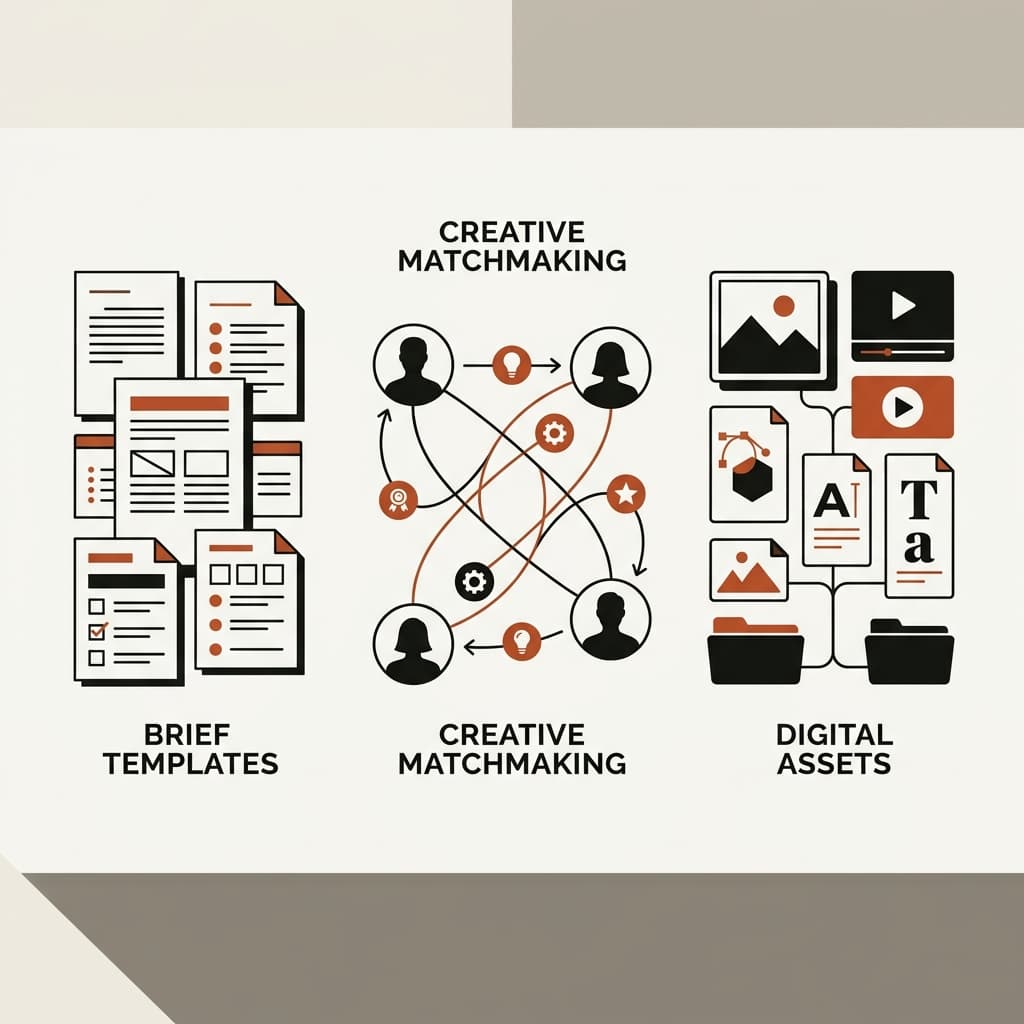
If you need to hire a freelancer in India, the short version is: define the deliverable in writing before you talk to anyone, budget using real market rates (not a guess), vet for a portfolio in your specific category rather than a general "creative" tag, and pay in milestones tied to approved work — never 100% upfront. The rest of this guide walks through each step, what actually goes wrong, and how to avoid it.
Why hiring freelancers in India goes wrong
Most bad freelance hires aren't a talent problem — they're a process problem. The brand didn't write down what "done" looks like, picked someone based on the lowest quote instead of a matching portfolio, or paid the full amount before seeing real work. Fix the process and the talent problem mostly disappears.
Step 1: Write the brief before you look for anyone
A freelancer can only be as good as the brief they're working from. At minimum, a hiring-ready brief needs:
- The deliverable, specifically — not "a logo" but "a primary logo mark, a wordmark, 3 color variations, and a one-page usage guide."
- Who it's for — your actual target customer, not "everyone."
- The one thing it needs to communicate — pick one, not five.
- Examples of work you like and don't like — 2-3 references beat a paragraph of adjectives.
- Your budget range — vague budgets get vague quotes.
- Your deadline — and whether it's flexible.
If writing this from scratch feels like a lot, That's My Brief's free brief generator structures it in about five minutes. A tight brief is also the single biggest lever on price — freelancers quote higher for open-ended scope because they're pricing in the risk of endless revisions.
Step 2: Budget against real rates, not a guess
Indian freelance creative rates vary by 3-5x within the same role depending on experience level, so "market rate" isn't one number. A few anchors, pulled from current listed rates:
- Brand/logo design: a complete brand identity runs ₹30,000–₹80,000 at mid-level, ₹80,000–₹3,00,000+ for senior creative direction. A logo alone is typically ₹15,000–₹40,000 mid-level, up to ₹1,50,000 for a full identity system from a senior designer.
- Copywriting: content writers charge roughly ₹2,000–₹6,000 per 1,000-word article at mid-level, ₹6,000–₹15,000 for senior strategist-writers.
- UI/UX and product design: UX-focused work (research, IA, testing) tends to price 10-20% above pure visual UI work at the same experience tier — see the full UI/UX rate breakdown.
- Social media management: typically quoted as a monthly retainer rather than per-post — see current social media manager rates.
The general pattern: junior freelancers save you money on execution-only work but cost you in revisions and strategic gaps; senior freelancers cost more per hour but usually finish faster with fewer rounds. For a full role-by-role breakdown, the freelance rates hub covers 18 categories with 2026 pricing.
Step 3: Decide where to look
There isn't one right answer — it depends on project size and how much hand-holding you want to do yourself.
- Open marketplaces (Upwork, Freelancer.com) give you the largest pool and the lowest prices, at the cost of doing your own screening across dozens of proposals. Reasonable for well-defined, lower-stakes work.
- Gig platforms (Fiverr) are built for fast, small, tightly-scoped tasks — not ambiguous or strategic work.
- Curated/managed marketplaces (including That's My Brief) pre-screen talent and match you to a short list instead of an open inbox — worth the trade-off when the project matters and your time is the scarcer resource. See a fuller breakdown in That's My Brief vs Upwork and That's My Brief vs Fiverr.
- Referrals and past collaborators remain, unglamorously, one of the highest hit-rate sources — worth asking your network before opening a public listing.
Step 4: Vet before you hire — a real checklist
Skip generic "check their portfolio" advice. Specifically:
- Portfolio match, not portfolio size. A designer with 8 relevant pieces beats one with 80 unrelated ones. Ask for work in your category and, ideally, your industry.
- Process, not just output. Ask how they'd approach your specific brief. A vague answer ("I'll get creative!") is a bigger red flag than a slightly high quote.
- References or verifiable past clients. A freelancer who can't point to anyone who'll vouch for them, on a project of meaningful size, is a risk regardless of how polished their portfolio looks.
- Communication speed during vetting. How someone responds before you've paid them is usually how they'll respond after.
- A written scope and timeline before any money changes hands — not a verbal agreement in a chat thread.
Step 5: Structure the contract and payment correctly
Three rules that prevent most disputes:
- Put it in writing — deliverables, revision rounds included, timeline, and payment schedule, even for a small project. A one-page agreement is enough; the point is that both sides agreed to the same thing.
- Pay in milestones, not upfront. A common structure is 30-40% to start, the remainder on approved delivery — adjusted for project length. Paying 100% upfront removes the freelancer's incentive to finish well; paying 0% upfront until final delivery is unfair to them and attracts fewer serious freelancers.
- Get tax and compliance right on your end. Payments to freelancers in India typically involve TDS deduction and may have GST implications depending on the amounts and your business structure — the specifics depend on your situation and change with policy, so this is worth a quick check with your CA or accountant rather than assuming a rule of thumb applies to you.
Common mistakes brands make
- Hiring on price alone. The cheapest quote is usually cheap because the scope is thinner than you think, not because you found a bargain.
- No reference examples in the brief. "Make it look premium" means something different to every freelancer — show, don't just describe.
- Changing the brief mid-project without adjusting price or timeline. Scope creep is the single biggest source of freelancer relationships going sour.
- Skipping the vetting step for "simple" projects. Small projects done badly still cost you time to fix or redo.
- No single point of contact on the brand side. Freelancers working off conflicting feedback from three people burn time reconciling, not creating.
Frequently asked questions
How long does it take to hire a good freelancer in India?
With an open marketplace, expect 1-2 weeks of screening proposals yourself. With a curated/managed marketplace, matching typically happens within 24-48 hours since the screening is already done.
Should I hire a freelancer or an agency?
Freelancers are usually more cost-effective for a single deliverable or an ongoing one-person need (a dedicated designer, a regular writer). Agencies make more sense when a project genuinely needs multiple coordinated disciplines at once (a full campaign with design, video, and media planning together).
What's a reasonable number of revision rounds to include?
Two to three rounds is standard for most creative deliverables. More than that usually signals the brief wasn't specific enough at the start, not that the freelancer needs more chances.
Do I need a written contract for a small project?
Yes — even a one-page agreement covering scope, timeline, and payment terms prevents the majority of disputes, regardless of project size.
How do I know if a rate quote is fair?
Compare it against category-specific 2026 rate data — see the rates hub — rather than a single "market rate" number, since rates vary significantly by experience level and specialization within the same role.