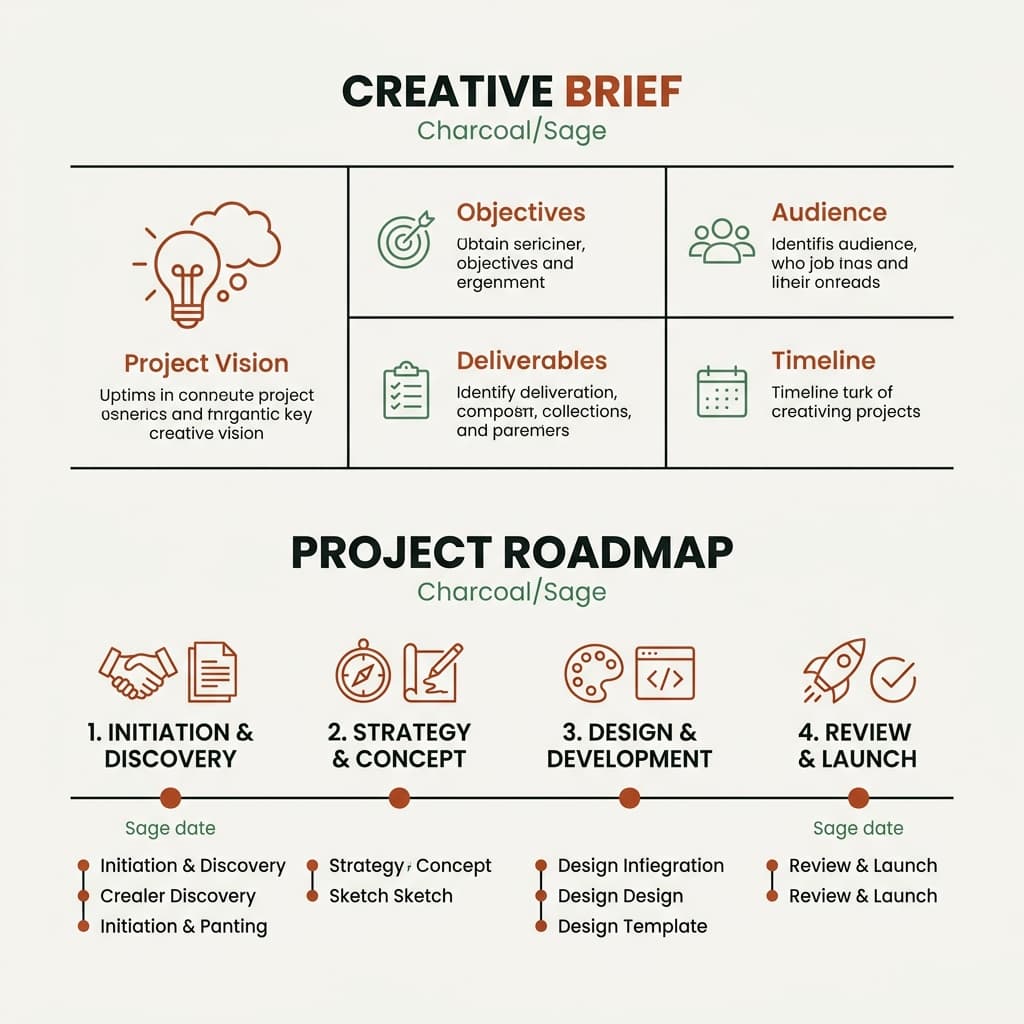
A creative brief that actually works has seven sections: the deliverable, the audience, the one message, references, brand constraints, budget, and deadline. Skip any one of them and you'll get quotes that don't match, revisions that don't converge, or both. Below is a copy-paste template built around what Indian D2C brands specifically get wrong, followed by a filled-in example.
Why most creative briefs don't work
A brief that says "we need a logo that feels premium but approachable, for a Gen Z audience" isn't a brief — it's a mood. It gives a freelancer nothing concrete to design against, so they either guess (and the guess is usually wrong) or ask a dozen clarifying questions before starting, which is the delay you were trying to avoid. A working brief replaces adjectives with specifics wherever possible.
The seven-section template
- 1. The deliverable, exactly. Not "a logo" — "a primary logo mark, wordmark, 2 color variations, and a one-page usage guide, delivered as AI/EPS/SVG/PNG."
- 2. The audience, specifically. Not "everyone" or "Gen Z" — "urban Indian women, 22–32, buying skincare online for the first time, price-sensitive but ingredient-conscious."
- 3. The one thing it needs to say. Pick one message, not five. If you can't pick one, that's a positioning problem to solve before the design brief, not during it.
- 4. Two to three references. Brands or work you like, and specifically what you like about each one — the color use, the tone, the layout — not just "like this."
- 5. What to avoid. Competitor look-alikes, colors, or styles that are explicitly off-limits. This one line prevents the most wasted revision rounds.
- 6. Budget range. A real number, not left blank. See current India freelance rate ranges if you're unsure what's realistic for the scope.
- 7. Deadline, and whether it's flexible. A hard external deadline (a launch date, an ad spend start date) changes how a freelancer prioritizes and quotes the work.
A filled-in example
Here's what this looks like for a real D2C brief: "We need a landing page design for a new ghee brand launching on Shopify. Audience: urban Indian home cooks, 28–45, who buy premium/organic grocery online. The one message: this is traditionally made ghee, not a mass-produced substitute. References: [Brand A]'s use of warm, textured photography; [Brand B]'s simple, uncluttered layout. Avoid: neon colors, anything that looks like a supplement brand. Budget: ₹35,000–₹50,000. Deadline: 3 weeks, flexible by a few days." Every sentence in that brief is something a designer can act on directly — no follow-up questions needed to start.
What changes for an agency vs. a solo freelancer
The template doesn't change based on who you're briefing, but the level of detail freelancers need is usually higher than what an agency account manager will ask for, since an agency has a strategist filling gaps behind the scenes. Writing the fuller version up front is what makes hiring freelancers as reliable as hiring an agency, without the agency markup.
Turn this into a brief you can post today
Once you've filled in the seven sections above, you can post the brief directly and get matched with vetted, India-based specialists — or use the free brief generator tool to turn rough notes into this structure automatically.