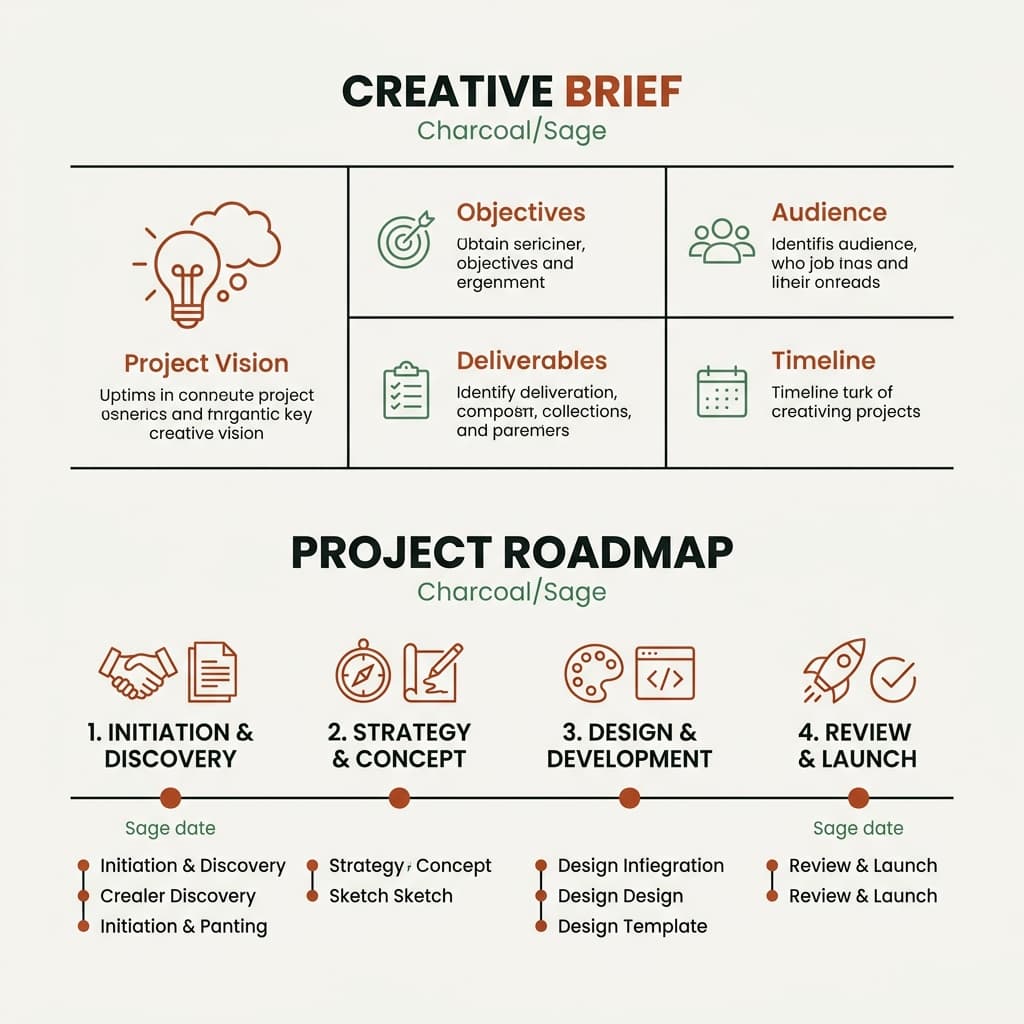
A creative brief is a one-to-two page document that tells a designer, writer, or video editor exactly what you need, why, for whom, and by when. A good one in India includes eight things: your business context, the specific deliverable, the goal, the target audience, the mandatories (logo, colours, tone), references, the budget in INR, and the deadline. Get those eight right and you cut revision rounds, avoid scope creep, and get work back that's usable on the first or second draft. Get them wrong and even a top-3% freelancer can't read your mind — which is the single most common reason creative projects in India run late and over budget.
Why does a creative brief matter so much?
Most failed freelance projects don't fail on talent — they fail on the brief. When you hand a freelancer a one-line WhatsApp message ("need a logo, something modern"), you've outsourced your own decisions to them. They guess, you reject, they guess again, and three weeks later you're frustrated and they're underpaid for the hours. A written brief flips this: it forces you to make the decisions up front, so the freelancer spends their time executing instead of mind-reading. For Indian D2C brands and startups working with distributed, often remote talent across Mumbai, Bengaluru, and tier-2 cities, a written brief is the contract that keeps everyone aligned.
What are the eight things every creative brief needs?
- Business context — one paragraph on who you are and what you sell. A skincare D2C brand and a B2B SaaS company need very different design languages.
- The deliverable — be specific. Not "branding" but "a primary logo, one horizontal lockup, and a 6-page brand guideline PDF."
- The goal — what should this achieve? "Look premium enough to justify a ₹1,200 price point" is a brief. "Make it nice" is not.
- The audience — age, city tier, income band, what they already buy. Indian audiences are not one market.
- Mandatories and constraints — existing colours, fonts, tagline, things you must keep or avoid.
- References — 3–5 examples you like and why, plus 1–2 you dislike. This single section removes more guesswork than any other.
- Budget in INR — a real range. Hiding the budget wastes everyone's time.
- Timeline — the real deadline and any milestones in between.
How detailed should the budget and timeline be?
Be honest about both. A lot of Indian founders hide the budget hoping for a lower quote — this almost always backfires, because the freelancer either over-quotes to be safe or under-scopes to win, and you get a worse result. State a range: "₹25,000–₹40,000 for the full identity." On timeline, separate the hard deadline (a product launch) from a soft one. If you don't know what something should cost, use a reference point before you write the brief — our free freelance rate calculator gives India-specific ranges by role and experience.
What does a filled-in creative brief look like?
| Section | Example |
|---|---|
| Business | D2C cold-pressed juice brand, Pune, 8 months old, premium positioning |
| Deliverable | Instagram launch campaign: 9 static posts + 3 reels covers |
| Goal | Drive 500 pre-launch waitlist sign-ups in 3 weeks |
| Audience | Health-conscious women, 25–40, metro + tier-1, ₹15L+ household income |
| Mandatories | Brand greens, Poppins font, #DrinkClean hashtag |
| References | 3 competitor grids attached; "clean, not clinical" |
| Budget | ₹30,000–₹45,000 |
| Timeline | Final files by 5 July; first drafts by 28 June |
A brief this specific can be quoted accurately in minutes and executed with one revision round instead of four.
What are the most common creative-brief mistakes in India?
- Vague adjectives with no reference — "modern," "premium," and "youthful" mean different things to everyone. Always pair the word with an example.
- Hiding the budget — it costs you more, not less.
- No single decision-maker — if four people give conflicting feedback, the freelancer loses. Name one approver.
- Skipping the audience — design for "everyone" pleases no one.
- Treating the brief as one-and-done — the best briefs get a 15-minute kickoff call before work starts.
Should you write the brief yourself or get help?
You should always own the decisions in a brief — only you know your business — but you don't have to start from a blank page. If writing it from scratch feels daunting, That's My Brief offers a free AI Brief Generator that walks you through these eight sections and produces a clean, structured brief in minutes. From there you can post it anonymously and That's My Brief, India's managed creative marketplace, will hand-pick 3–5 vetted freelancers from the top 3% of applicants and send curated matches within 24 hours. You write the brief once; we handle the sourcing, vetting, and delivery support — the difference between a managed marketplace and an open one like Upwork or Fiverr where you filter hundreds of bids yourself.
A strong brief is the highest-leverage 30 minutes you'll spend on any creative project. Write it once, write it well, and every freelancer you work with after that gets easier. For more on India's creative-hiring landscape, NASSCOM reports on the country's digital and creative talent economy are a useful reference.
Last updated: June 2026.